The Aral Sea Region · August 2026 Earth and Space Sciences Regents cluster
From NY Science Standards Wiki
| ← Cluster 6 of 11 | ⇱ August 2026 Earth and Space Sciences Regents Exam | Cluster 8 of 11 → |
The Aral Sea Region is cluster 7 of 11 on the August 2026 Regents Examination in Earth and Space Sciences (questions 28–32). Each question is shown with its answer key and the performance expectation it assesses.
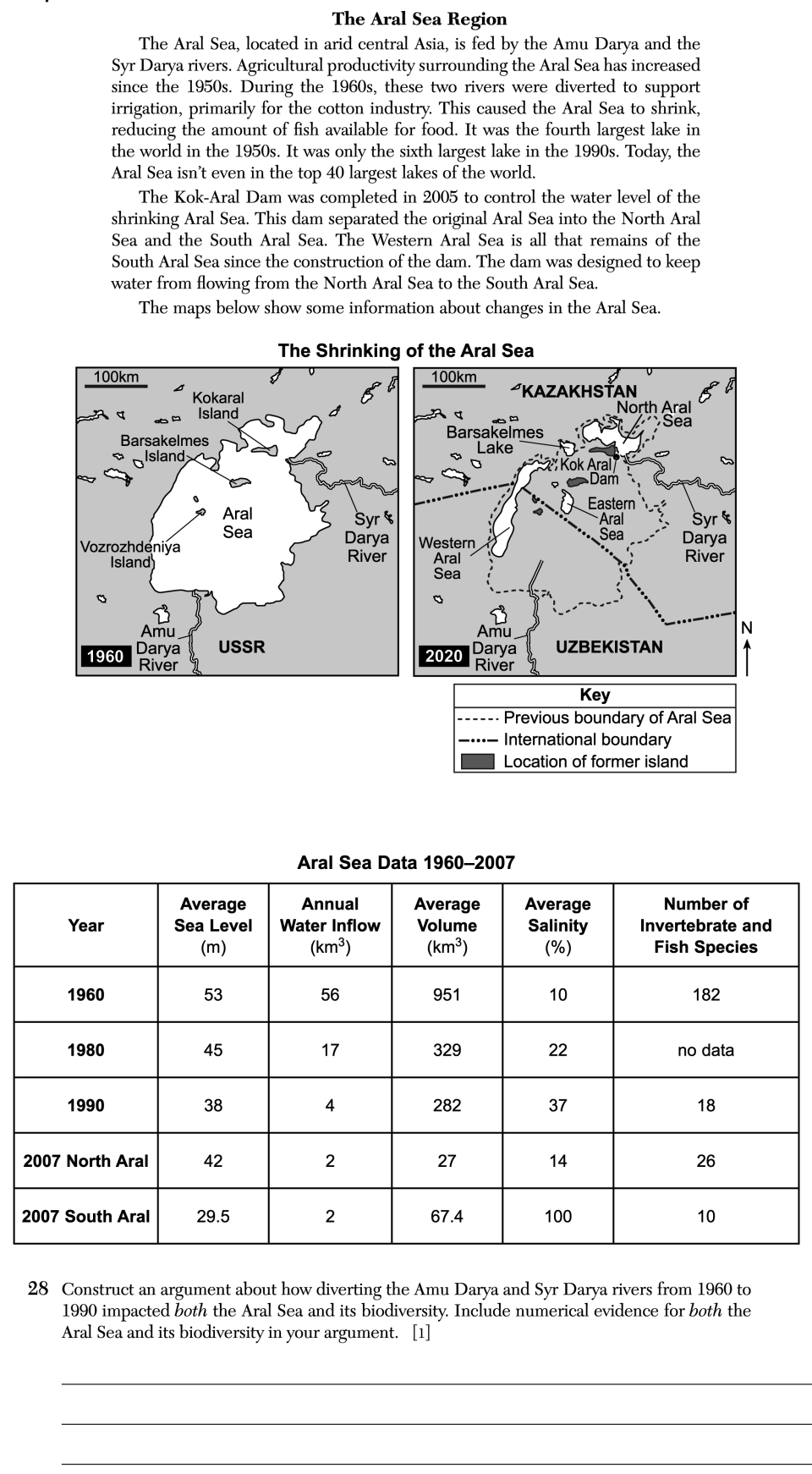
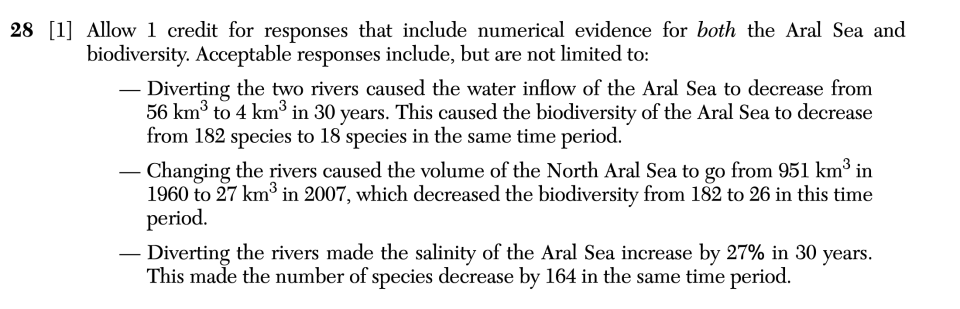
Question 28 · HS-ESS2-7
PLD · Level 4HS-ESS2-7 · Coevolution of Earth and Life
Level 4Construct an argument based on evidence about the coevolution of Earth’s systems and life on Earth.
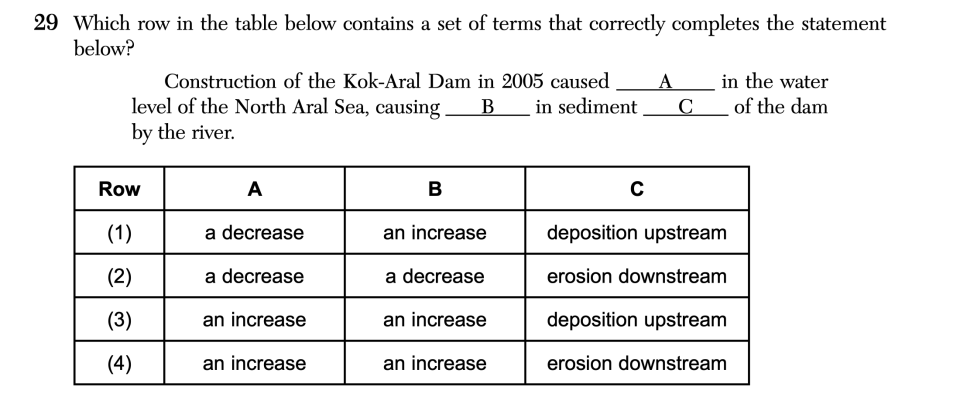
Question 29 · HS-ESS2-2
PLD · Level 1HS-ESS2-2 · Feedbacks in Earth’s Systems
Level 1Using geoscience data/information, identify one change in Earth’s surface or an Earth system and how it will result in a change to another Earth system.

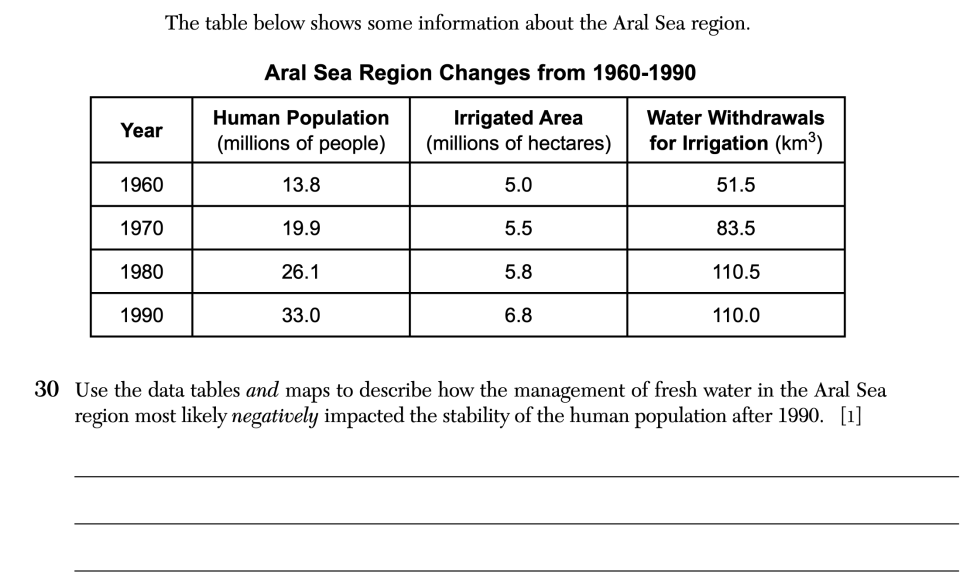
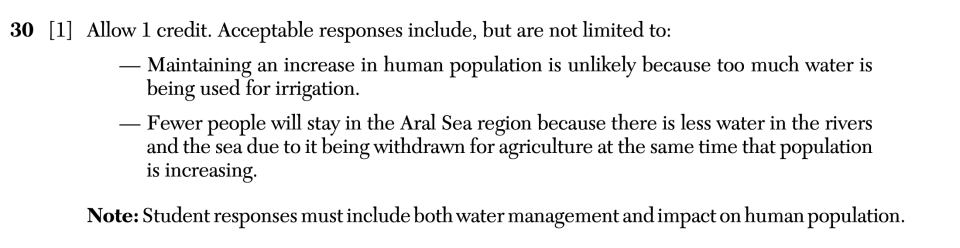
Question 30 · HS-ESS3-3
PLD · Level 2HS-ESS3-3 · Resource Management and Sustainability
Level 2Given parameters /or data (in a computational simulation), describe a relationship between two of the following: the management of natural resources, the sustainability of human populations, and/or biodiversity or identify how a solution to the management of natural resources or the sustainability of human populations, and/or biodiversity reduces the impact on humans.
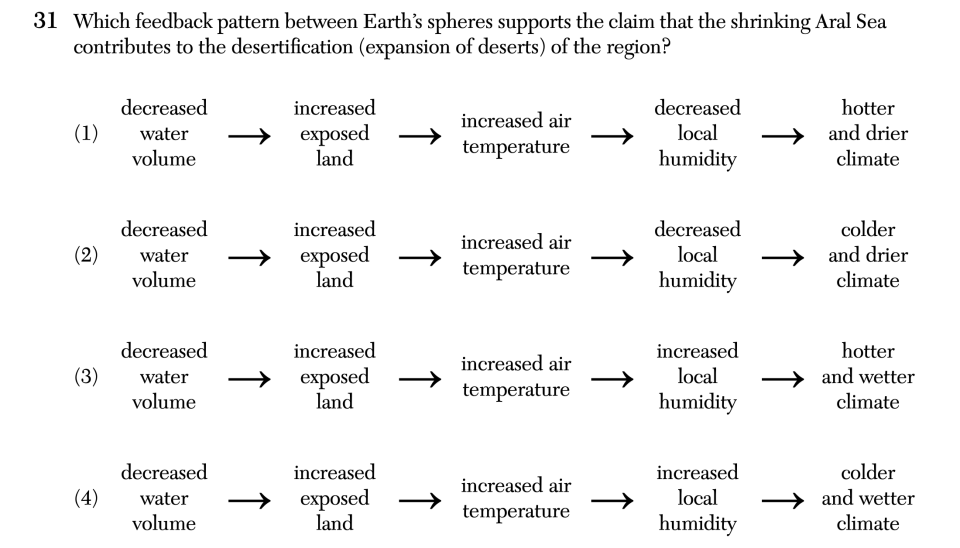
Question 31 · HS-ESS2-2
PLD · Level 2HS-ESS2-2 · Feedbacks in Earth’s Systems
Level 2Identify the geoscience data/information that provides evidence for a given claim that a change to Earth’s surface or an Earth system results in a change to another Earth system or provides evidence to support/refute a given claim that a change to an Earth’s surface or one Earth system results in a change to another Earth system.

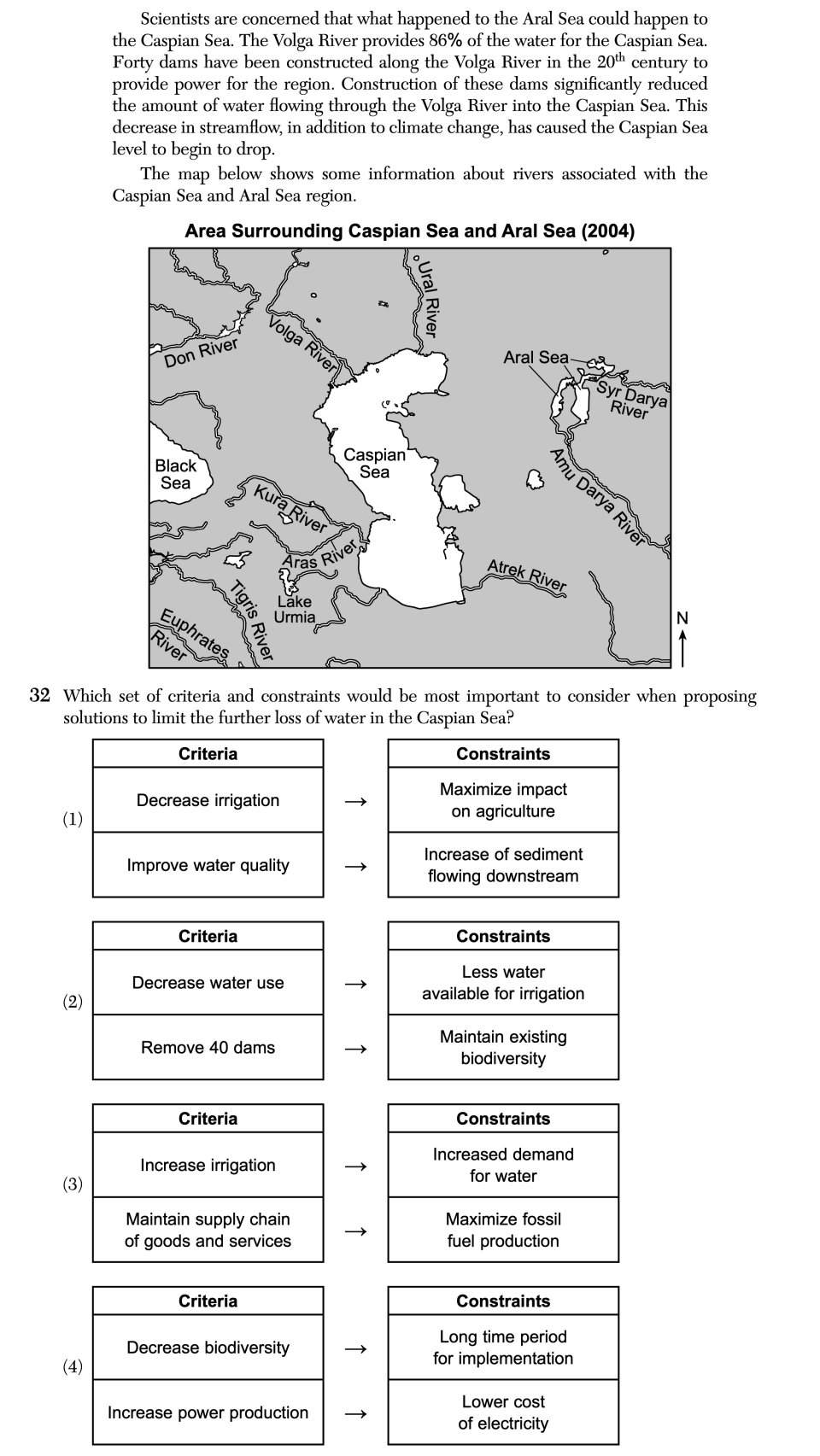
Question 32 · HS-ETS1-3
PLD · Level 3HS-ETS1-3 · Evaluating Solutions and Trade-offs
Level 3Identify a solution to a complex real-world problem based on prioritized criteria and/or trade-offs (positives and negatives) for a range of constraints, such as cost, safety, reliability, aesthetics, as well as possible social, cultural, or environmental impacts.

Page contributors: Conrad Richman